

Building Design in Bangladesh: Village & Modern Ideas
What does your dream home look like?
For most Bangladeshi families, building a house is the biggest decision of their life. But the options can feel overwhelming. What style works for your land? What fits your budget? What looks good and holds up in Bangladesh’s heat, rain, and floods?
This guide covers everything you need to know about building design in Bangladesh from modern city homes to simple, beautiful village houses. You will find real ideas, honest costs, and practical tips you can use right away.
Why Building Design in Bangladesh Needs Special Planning
Bangladesh is not like other countries when it comes to construction. The climate is hot and humid for most of the year. Monsoon rains are heavy. Many areas flood every single year.
A good building design in Bangladesh must handle all of this. A home that looks beautiful but has poor drainage or weak structure will become a costly problem within just a few years.
Beyond climate, land size matters a lot here. Most families in rural areas have small plots — 3 to 5 katha is common. In cities, space is even tighter. So every square foot needs careful planning.
The right design gives you a home that is strong, comfortable, and looks good for decades. That is exactly what this guide helps you build.
Beautiful House Design Bangladesh: What Works Best
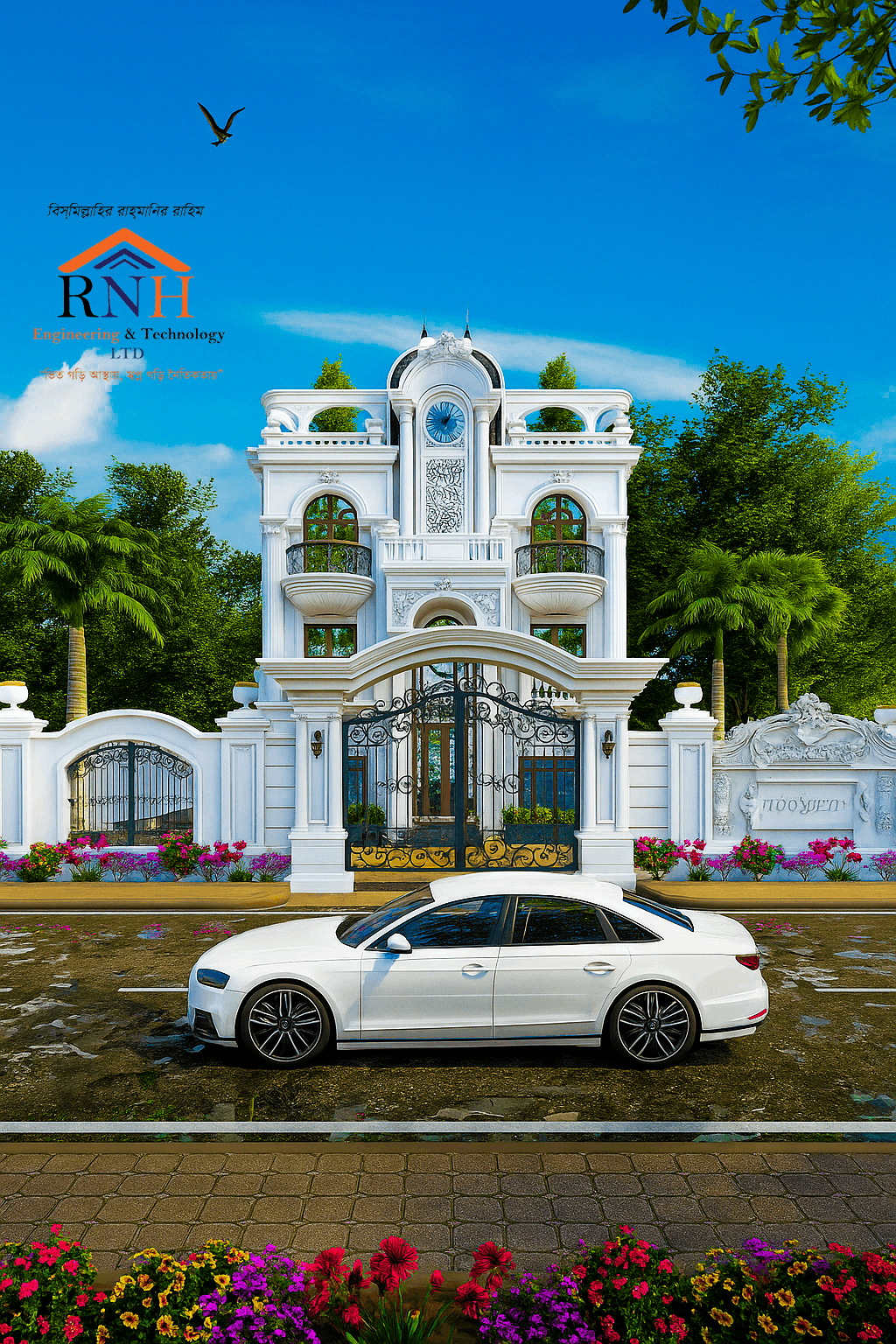
When people search for a beautiful house design Bangladesh style, they are usually looking for something that is modern on the outside but practical on the inside.
The most loved designs in Bangladesh today combine a clean flat roof, smooth plastered walls, a well-designed front elevation, and a small covered porch at the entrance. Simple. Sharp. Affordable.
Top Design Features That Make a Home Look Beautiful
A front elevation design is what people see first. A home with a clean, well-proportioned front face — good window placement, a strong porch, and a neat boundary wall — stands out in any neighbourhood.
Color makes a huge difference too. Light tones like off-white, warm grey, and soft cream work best in Bangladesh’s climate. They reflect heat and stay cleaner longer than dark colors.
Adding brick texture panels on certain sections of the exterior wall is a popular modern touch. It breaks the plain plaster look and gives the home a premium feel — without much extra cost.
Village House Design: The Style Bangladesh Loves
Not every home needs to look like a Dhaka city apartment. Village house design has its own charm — and its own logic that actually works better in rural settings.
The traditional Bangladeshi village home has been around for generations. A wide veranda at the front. An open courtyard in the middle. Separate space for cooking. This layout was designed for the climate long before modern architecture arrived.
House Design in Village: What Has to Be There
A proper house design in village Bangladesh must include a few non-negotiable elements. The floor (plinth) must be raised at least 2 to 3 feet above the surrounding ground. This protects the home from flood water — a yearly reality in most rural districts.
Cross-ventilation is essential. Rooms need windows on opposite walls so air moves through the house naturally. This keeps the home cool without electricity — which matters in areas with frequent load shedding.
RCC (reinforced concrete) columns are a must, even for budget homes. Many village homeowners try to skip columns to save money. This is a serious mistake. Columns are what keep the house standing through storms and floods.
-
- High plinth — minimum 2.5 feet above ground level
-
- Wide front veranda for shade and outdoor living
-
- Cross-ventilated rooms with windows on opposite walls
-
- Proper RCC columns at every corner and junction
-
- Waterproofed roof — flat slab or sloped tin with good drainage
-
- Strong boundary wall with a lockable main gate
Bangladesh Building Design: Styles for Every Budget
Bangladesh building design is not one-size-fits-all. There are real options for every budget level — from a basic tin shed to a fully modern two-storey home.
Here is an honest breakdown of the most common house types and their approximate costs:
| House Type | Cost per Sq Ft (BDT) | Best For |
|---|---|---|
| Tin Shed / Semi-Pucca | ৳ 800 – ৳ 1,200 | Rural village, low budget |
| Single Storey (Basic Pucca) | ৳ 1,500 – ৳ 2,200 | Town, upazila, village |
| Single Storey (Modern Finish) | ৳ 2,500 – ৳ 3,500 | District town, suburb |
| Duplex / Two-Storey | ৳ 3,200 – ৳ 4,800 | Urban, semi-urban |
| Modern City Design (Premium) | ৳ 5,000 – ৳ 8,000+ | Dhaka, Chittagong, Sylhet |
These numbers are realistic estimates based on current material prices. Always get at least three quotes from local contractors. Prices vary by district and by which materials you choose.
Single Storey — The Most Practical Choice
For most middle-income families, a single-storey home with a flat RCC roof is the smartest first build. Why? Because you can add a second floor later when money allows — if you build the columns and foundation correctly from the start.
Duplex — Smarter Use of a Small Plot
A duplex design makes sense when your plot is small but your family is large. Parents on one floor, children on another. Or rent out the top floor for monthly income. This style is now popular even in smaller district towns — not just big cities.
Village House Design in Bangladesh: Modern Meets Traditional
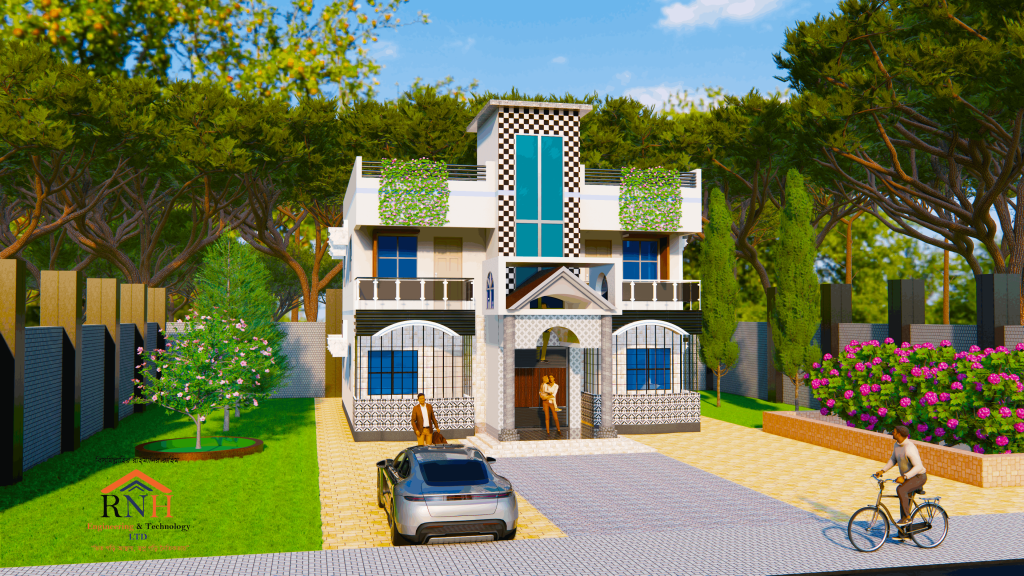
The most exciting trend in village house design in Bangladesh right now is the blend of old and new. Architects are taking the best parts of traditional Bangladeshi homes — the veranda, the courtyard, the natural airflow — and combining them with modern materials and clean exterior designs.
The result is a home that feels rooted in Bangladesh but looks completely updated. It is more affordable than a purely modern design. And it actually performs better in village conditions.
Bangladesh House Design Village Style: 4 Elements That Always Work
When planning a bangladesh house design village style, these four elements consistently produce the best results:
1. The Veranda: A covered front veranda of at least 6–8 feet width gives you an outdoor living space that is shaded and breezy. It is where families gather, where guests are welcomed, and where children play safely.
2. The Open Courtyard: A small interior or side courtyard brings natural light deep into the home. It also improves airflow dramatically. Even a 10×10 ft open space makes the whole house feel bigger and more comfortable.
3. Separate Kitchen Block: In rural Bangladesh, cooking often involves wood or gas fires. A separate or semi-attached kitchen keeps smoke and heat away from sleeping and living rooms. This is practical, not just traditional.
4. Sloped or Hip Roof: While flat RCC roofs are popular in cities, a slightly sloped roof in village areas drains rainwater faster and is more suited to Bangladesh’s monsoon rainfall. A hip roof style also adds a distinct look to the home’s exterior.
Building Design in Bangladesh: How to Start the Right Way
Most construction problems in Bangladesh happen before the first brick is laid. People skip planning, rush into buying materials, and end up with a home that needs expensive fixes within a few years.
Here is how to start correctly:
Step 1 — Measure your land properly. Get an accurate survey done. You need exact dimensions before any design work can begin.
Step 2 — Set a realistic budget. Know your total available money — including furniture, finishing, and a 15% buffer for surprises. Build within that number, not beyond it.
Step 3 — Hire a qualified engineer or architect. A structural drawing is not optional. It is what keeps your house standing. A one-time design fee is tiny compared to the cost of fixing structural problems later.
Step 4 — Choose your design based on location, not trends. What looks great in Gulshan does not always work in a Sylhet village. Pick a style suited to your land, climate, and neighbourhood.
Step 5 — Build the structure for the future. Even if you only build one storey now, design your columns, beams, and foundation to carry a second floor. It costs very little extra now and saves a huge amount later.
Frequently Asked Questions
What is the best building design for a village house in Bangladesh?
The best building design in Bangladesh for a village home combines a raised plinth, wide front veranda, RCC columns, and cross-ventilated rooms. A single-storey flat-roof or hip-roof structure of 600–900 sq ft works perfectly for most rural families. Mix modern exterior finishing with traditional layout features like a veranda and courtyard for the best result.
How much does it cost to build a house in Bangladesh?Building design in Bangladesh construction costs start around ৳1,500 per sq ft for a basic single-storey pucca home and can reach ৳7,000+ per sq ft for premium city designs. A typical 800 sq ft village home costs between ৳12 lakh and ৳28 lakh depending on material quality and location. Always get at least three contractor quotes before finalizing your budget.
What does a beautiful house design in Bangladesh look like?A beautiful house design Bangladesh style typically features a flat RCC roof, smooth plastered exterior in light colors, a well-designed front porch, large windows, and a clean boundary wall with a stylish gate. Adding small brick texture panels to the facade and using LED exterior lighting gives the home a modern, polished look without major extra cost.
Which house design is most popular in rural Bangladesh?Village house design in Bangladesh most commonly follows the single-storey pucca or semi-pucca model — brick walls, flat or sloped roof, wide veranda, and a separate kitchen. Tin shed homes are still widely built as starter homes. Fully modern designs are becoming more popular in rural areas too, as construction material access improves across upazila towns.
Is it worth investing in a proper building design in Bangladesh?Yes, absolutely. Proper building design in Bangladesh with a certified structural drawing saves far more money than it costs. Without a plan, homeowners commonly face wall cracks, water leakage, and structural failures within 5–10 years. A professional design fee is typically 1–3% of total construction cost — one of the best investments you can make before breaking ground.
